You’ve decided to start Pilates, great choice. But then you start searching, and suddenly you’re hit with a flood of unfamiliar terms:
Reformer, Cadillac, chair, barrels
Now you’re wondering: what equipment do you need for Pilates, and do you really need all of it?
If you’re feeling confused, you’re not alone. Many beginners (and even studio owners) struggle to figure out what’s essential and what’s optional.
Let’s simplify it.
Common Challenges People Face When Choosing Pilates Equipment
Whether you’re setting up a home space or planning a studio, the same issues tend to come up:
- Not knowing which equipment is actually necessary
- Overspending on items you don’t use
- Buying low-quality gear that doesn’t last
- Confusion about different types of Pilates equipment
- Difficulty finding reliable options during a pilates equipment sale
- Uncertainty about investing in commercial Pilates equipment
The result? Wasted money, frustration, and a setup that doesn’t support your goals.
Why Choosing the Right Equipment Feels So Complicated
Pilates is unique because it can be done with minimal gear or with highly specialized machines.
Here’s why it gets confusing:
1. Too Many Options
From simple mats to advanced machines, the range of types of Pilates equipment is wide.
2. Different Goals
A beginner at home needs very different tools compared to a professional studio.
3. Quality Matters More Than You Think
Cheap equipment can affect both safety and results.
4. Misleading “Deals”
A pilates equipment sale might seem attractive, but not all deals offer real value.
Breaking Down the Essential Pilates Equipment
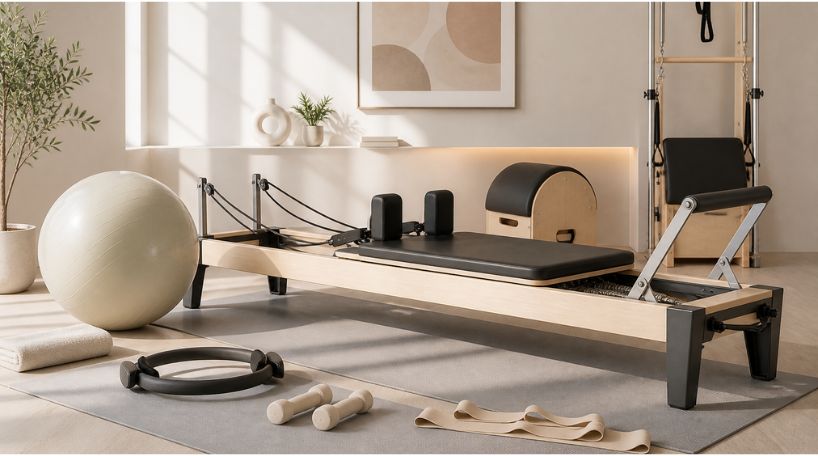
Let’s answer the big question clearly: what equipment do you need for Pilates?
1. Pilates Mat (The Foundation)
This is where most people start. A good-quality mat provides support and comfort for floor exercises.
2. Resistance Bands
Affordable and versatile, these add intensity and variety to your workouts.
3. Pilates Ring (Magic Circle)
Great for targeting inner thighs, arms, and core muscles.
4. Stability Ball
Helps improve balance, coordination, and core strength.
5. Reformer Machine
This is one of the most popular pieces of equipment for more advanced or guided workouts.
6. Cadillac, Chair, and Barrels
These are part of more advanced types of Pilates equipment, typically found in studios.
How to Choose Based on Your Needs
Not everyone needs a full studio setup.
For Beginners at Home
Start simple:
- Mat
- Resistance bands
- Ring
- For Intermediate Users
Add:
- Stability ball
- Entry-level reformer
- For Studio Owners
You’ll need:
- Multiple reformers
- Cadillac units
- Chairs and barrels
- Durable commercial Pilates equipment
The key is to scale based on your goals, not impulse buying.
Avoiding Common Buying Mistakes
Before you jump into a purchase, keep these tips in mind:
1. Don’t Chase the Cheapest Option
Low prices during a pilates equipment sale can be tempting, but durability and safety should come first.
2. Check Build Quality
Especially for reformers and larger machines, these are long-term investments.
3. Think About Space
Measure your area before buying bulky equipment.
4. Look for Trusted Suppliers
Reliable brands ensure consistency and better performance.
A Smarter Way to Invest in Pilates Equipment
If you’re serious about Pilates, whether personally or professionally, it’s worth considering a more thoughtful approach.
Instead of piecing together random items, many people now prefer curated, high-quality solutions from specialized providers like Flo Pilates.
What sets Flo Pilates apart is the focus on durability, performance, and design. Whether you’re building a home setup or sourcing commercial Pilates equipment, having everything aligned under one trusted brand simplifies the process.
Rather than guessing which types of Pilates equipment work best together, a cohesive system ensures better results and a smoother experience.
Why Upgrading to Premium Equipment Matters
You don’t need the most expensive setup but quality does make a difference.
Here’s how:
1. Better Performance
High-quality equipment moves smoothly and supports proper form.
2. Increased Safety
Especially important for machines like reformers.
3. Long-Term Savings
Durable equipment lasts longer, reducing replacement costs.
4. Professional Experience at Home
A premium setup brings studio-level workouts into your space.
Flo Pilates, for example, is known for offering reliable solutions that balance functionality and design, making it easier to create a setup you’ll actually use consistently.
Building a Setup That Grows With You
The best approach is to start small and upgrade gradually.
- Begin with essentials
- Add equipment as your skills improve
- Invest in quality when it matters most
Whether you’re exploring a pilates equipment sale or planning a full studio, the goal is to build a system that supports your progress, not overwhelms you.
With providers like Flo Pilates, scaling becomes more manageable because you’re investing in pieces that are designed to work together.
Final Thoughts: Start Smart, Grow Strong
If you’ve been wondering what equipment you need for Pilates, the answer is simpler than it seems:
Start with the basics, focus on quality, and expand as needed.
You don’t need everything at once, but you do need the right foundation.
By understanding the different types of Pilates equipment and making informed choices, you can create a setup that truly supports your goals.
And when you’re ready to take things to the next level, exploring trusted options like Flo Pilates can help you upgrade with confidence.
Because the right equipment doesn’t just improve your workout, it transforms your entire Pilates experience.